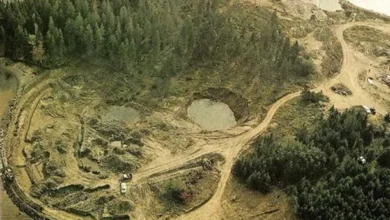
The coins found near the Money Pit may have revealed a clue that reaches far beyond their age or origin. Rick closer to the treasure than ever before. 🪙🏝️🔍
For years, the Money Pit has been the beating heart of Oak Island’s mystery, a place where every timber, void, and trace of metal seems capable of rewriting the story.
But a coin with possible links to the Knights Templar would push that tension into entirely new territory. Found in the very zone that has consumed generations of searchers, such an artifact would not simply add another object to the collection.
It could force Rick and Marty Lagina to ask whether the people behind the island’s deepest structures belonged to a far older and more organized world than anyone expected.
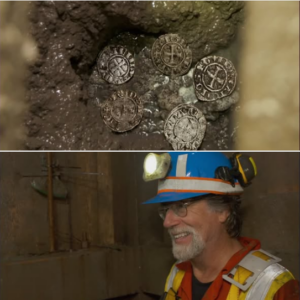
The Coin That Turns the Money Pit Into Something Bigger




The location is what makes the discovery so dangerous. Oak Island has produced old coins before, and any isolated object can travel through trade, later visitors, or simple accident. But a coin recovered from the Money Pit area carries a different emotional weight because that is where the island’s greatest theories converge.
For Rick, every object found there is measured against the same brutal question: is this connected to the original depositors, or is it merely another piece of debris left behind by centuries of searchers? A coin with possible Templar characteristics would immediately raise the stakes. If its age, symbols, metal

composition, or style genuinely point toward a medieval European context, then the timeline of the Money Pit could be dragged backward by centuries.
That would make the familiar eighteenth-century pirate theories look far less complete. More importantly, it would place a physical object associated with an older world directly beside the underground structures the Fellowship has spent years trying to understand.
Suddenly, the suspected tunnels, old timbers, shafts, and unexplained construction could be viewed through an entirely different lens. Rick has always believed that Oak Island may contain evidence of a carefully planned operation rather than a hurried burial.
A Templar-linked coin in the Money Pit would fit that possibility far more comfortably than a random piece of pirate loot. It would not prove that the Knights Templar built the system, but it would introduce something the theory has always needed: a tangible artifact appearing in the most important place on the island.
The Templar Theory Would No Longer Be Easy to Push Aside
The Knights Templar theory has survived because it can explain something that simpler treasure stories often struggle with: organization.
The Money Pit legend describes an extraordinary amount of effort. Deep excavation, possible tunnels, layered construction, flood defenses, and the suggestion of hidden chambers all point toward a group with time, manpower, engineering skill, and a powerful reason to keep something concealed. Pirates could bury treasure, but they usually needed speed.
A disciplined organization could build for the long term. That is why a Templar-associated coin found close to the Money Pit would immediately reopen some of Oak Island’s largest historical questions.
The order possessed wealth, military structure, international connections, and a reputation for secrecy that only grew after its destruction in medieval Europe.

Legends surrounding lost Templar treasure have been exaggerated for centuries, but the Fellowship does not need every legend to be true for the coin to matter.
They only need to establish that the object genuinely belongs to the right historical world. If that connection survives analysis, then the island could be linked to people moving through the Atlantic long before the traditional treasure hunt began.
The coin would also force the team to reconsider other clues that once seemed disconnected. Strange symbols, medieval-looking metalwork, old stone features, and possible European construction methods could suddenly appear less isolated.
One object cannot turn speculation into history, but it can create a pattern worth testing. And if another artifact from the same era emerges near the Money Pit, the pressure becomes enormous.
The Templar theory would no longer live only in old manuscripts, maps, or historical imagination. It would be standing inside the excavation itself.
One Coin Could Rewrite the Entire Meaning of the Treasure Hunt
The most unsettling possibility is that the coin changes not only who may have visited Oak Island, but why the Money Pit was created in the first place. If the object belongs to a Templar-era context and is genuinely connected to original underground activity, then the treasure hunt could move away from the idea of stolen gold and toward something much larger.
A powerful group would not necessarily hide only money. It could protect documents, religious objects, political secrets, or material considered too valuable or dangerous to remain in Europe. That possibility fits the scale of the mystery more closely than a simple chest buried beneath a tree. It would also explain why later searchers seemed to encounter so much resistance from the underground system.
A chamber protected by tunnels and water would suggest the builders expected someone to come looking. Rick has spent years trying to understand the intention behind the island’s design, not simply the value of whatever may be hidden. A Templar coin in the Money Pit would speak directly to

that obsession because it could place a specific historical culture near the heart of the underground mystery. The risk, of course, is that the artifact may ultimately prove unrelated to the original deposit.
It could have arrived through later activity, trade, collecting, or contamination of disturbed ground. Oak Island has been excavated so aggressively that context is everything. But if the Fellowship can establish that the coin came from an undisturbed or meaningful layer, the consequences would be enormous.
The Money Pit would no longer be only a treasure site. It could become evidence of a much older operation whose builders deliberately erased themselves from history.
For Rick and Marty, that would change the search completely. They would no longer be asking only what lies beneath Oak Island. They would be asking whether the people who created the mystery belonged to one of the most secretive and controversial orders in medieval history.
And if that answer begins to move toward yes, one small coin may have done what generations of digging could not: reveal who the island was built to protect.